


More people are starting companies alone, and most of them have not been paid yet. The freshest solo founder statistics come from The Startup Project, which published its State of Solo Founders report on November 6, 2026. It analyzed 970 startups submitted to its directory between May and October. 61% had a single founder, and 82% of those solo founders reported no revenue at all.
The same report says 80% of them had already launched. So most of these products are online without a paying customer. If you are building alone, change the order: put a price and a checkout in front of buyers before you build the full product. You can make that sales page in Youmake in an afternoon, and the prompt is further down.
What do the new solo founder statistics say?
The Startup Project received 1,578 directory submissions, removed duplicates, bulk submissions and local service businesses, and kept 970. Founders picked their own team size, stage and revenue band on a form.
| Measure | Solo founders (592) | Teams (374) |
|---|---|---|
| Reported no revenue | 82% | 48% |
| Under $1K a month | 15% | 22% |
| $1K a month or more | 2.5% | 30% |
A few more numbers from the report:
- 63% of solo founders said they had launched and still had no revenue.
- 15 of the 592 solo founders reported $1,000 a month or more. Four reported $10,000 or more.
- The solo share of the sample rose from 55% before September to 66% in September and October.
- Only 5.4% used a free hosting subdomain, so nearly all of them had bought a domain.
The report sums it up this way: "Getting a product live has become the easy part. Finding people who will pay for it has not."
Why are so many people starting alone?
Building got cheap. Carta's Solo Founders Report found that the share of new startups with one founder rose from 23.7% in 2019 to 36.3% in the first half of 2025. Gusto's 2026 New Business Formation report, released in May, found that 60% of new business owners used AI to help launch in 2025. A syndicated feature called "The rise of the solo startup" repeated those figures on local news sites on November 20, 2026, alongside a founder who estimated that AI tools had saved about six months of development.
The same Carta report has a less cheerful number. Solo-led companies were 30% of startups founded in 2024 and received 14.7% of the cash raised in priced equity rounds that year. Investors still prefer teams, so most solo founders will be paid by customers or not at all.
Does building an AI product help?
A little, and the report is careful about it. 46% of the solo founders described an AI product. Among them, 22% reported some revenue, against 14% of the rest. At $1,000 a month or more, the count was 12 of 275 AI founders and 3 of 317 others.
The authors add a warning: the numbers "do not show that adding AI to a product produces revenue." Twelve founders is a small group. I read it as a sign that buyers are currently spending on AI tools, which is useful to know when you pick a market. It is no reason to bolt a chatbot onto an idea nobody wants.
What should a solo founder do now?
The report explains the gap in one line: "A solo founder has to build, sell and support the product with the same pair of hands." A team of three can sell while someone else builds. You cannot, so the order matters more for you than for them.
- Sell the offer before the product. Write one page that says who it is for, what it does and what it costs. Add a real checkout or a paid pre-order. Email sign-ups tell you less, because typing an address costs nothing.
- Pick a buyer you can reach this week. A narrow group you already belong to beats a big market you have to advertise to. The vibe coding project ideas list is sized for one person and filtered by whether a stranger would pay.
- Talk to 20 people before adding features. Send the page to 20 people who fit. If nobody pays or asks a serious question, change the offer or the audience. Leave the code alone.
- Count revenue as the launch. In this dataset, "launched" mostly meant "online". Call it launched when the first payment arrives.
- Keep the first version small. Every feature you ship alone is a feature you maintain alone. The data on vibe coding technical debt shows how fast upkeep grows.
For a worked example of charging on the first day, see the self-funded startup lessons from ClockwiseTV.
Build your sales page in Youmake, with a 3-day trial for $1 →
How to test for revenue with Youmake
Youmake is an AI app builder: you describe a website, web app, mobile app or slide deck, and it builds it with a live preview next to an agent chat. For this job you only need a website with a checkout.
-
Open the composer and describe the offer. Paste a prompt like this and swap in your product:
"Build a one-page website for LedgerLite, a bookkeeping template pack for freelance designers. Headline that names the buyer and the result. Three short benefits. A section with two screenshots I will upload. One price: $49 founding-member pre-order, with a note that delivery is on a date I set. A 'Pre-order now' button that opens checkout. A short FAQ with a refund answer. A second button, 'Not ready? Get the launch email', that collects an email address. No blog, no extra pages."
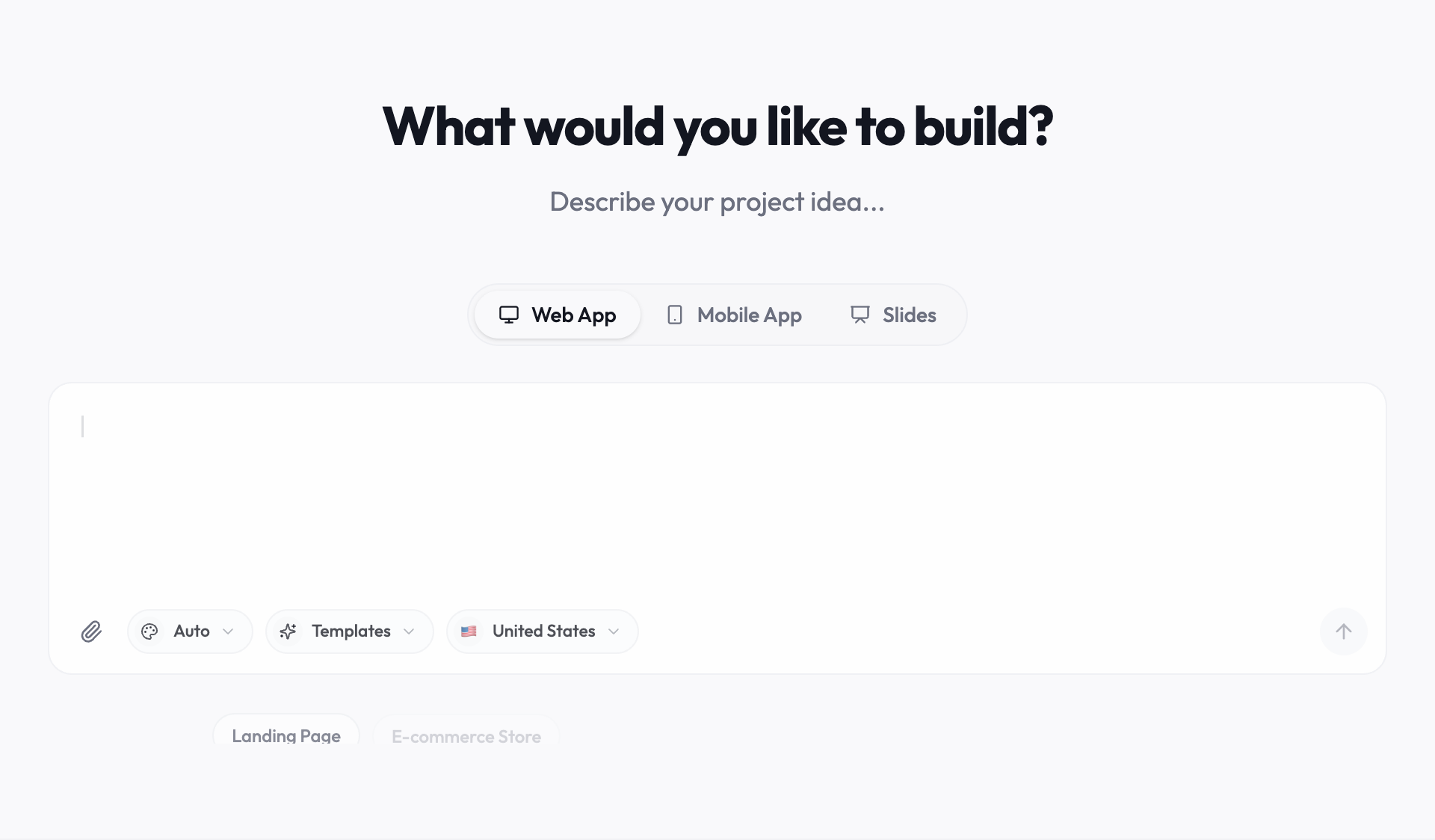
- Connect Stripe. The payment goes to your own Stripe account. Say on the page when buyers get the product and how refunds work, and keep that promise.
- Edit in the chat until a stranger understands it. "Put the price above the fold." "Shorten the headline to eight words." Read the page on your phone before you send it to anyone.
- Run the security scan and publish to your own domain. A real domain makes a pre-order easier to trust.
- Send it to your 20 people and count payments. When the first ones arrive, build the product in the same workspace, and export the code or sync it to GitHub so the business does not depend on one vendor.
If this is your first build, the guide to building an app without coding covers the basics.
What this data cannot tell you
- The sample is not random. The report says it skews toward early, solo, online founders who want a free directory listing. Founders with real traction have less reason to submit.
- Revenue is self-reported and was not checked against any records.
- Six months of data cannot show whether these founders earn later. Nobody was followed over time.
- The report notes that some of the team advantage may reflect older companies, since teams in the sample could simply have been around longer.
- A paid pre-order page tests demand for one offer at one price. A "no" can mean the wrong price or the wrong audience.
Read 82% as a snapshot of one directory in mid-2026.
FAQ
What percentage of solo founders make money?
In The Startup Project's 2026 sample of 592 solo founders, 18% reported any revenue and 2.5% reported $1,000 a month or more. The figures are self-reported and come from founders who listed in a free directory, so treat them as a rough picture.
Are solo founders less successful than teams?
In this sample, 30% of teams reported $1,000 a month or more, twelve times the solo rate. Carta's data also shows solo-led startups raising a smaller share of venture money than their share of new companies. Neither source proves that working alone causes the gap.
How do I get my first customer as a solo founder?
Write one page with a clear buyer, a price and a checkout, then send it by hand to 20 people who fit. A payment or a pre-order is the signal to keep building. More playbooks are in the founders hub, including what a narrow product did for Odessia, acquired by OpenAI 27 days after launch.
Start a 3-day Youmake trial for $1 →
Sources
- The Startup Project: The State of Solo Founders, 2026 (November 6, 2026)
- Carta: Solo Founders Report 2025
- Gusto: 2026 New Business Formation report (May 14, 2026)
- Stacker via KVIA: The rise of the solo startup (November 20, 2026)
- Youmake code ownership