


On November 10, 2026, Francis Davidson announced that OpenAI had acquired Odessia, his AI travel concierge. The product had been open to the public since October 14, which is 27 days. The same day, Odessia's website switched to a single notice: the service is no longer available.
If you are building an AI product, two things in this story matter more than the price, which nobody has disclosed. The first is what OpenAI bought, because it was not a chat window. The second is what happened to Odessia's users, because it can happen to any tool you depend on. Both lead to the same advice: pick a narrow market, build the part a model cannot generate, and ship early in a product you own. You can do that this week with Youmake, and the last section has a prompt to start from.
What happened when OpenAI acquired Odessia
Here is what the public record shows:
- June 2026: Davidson, who co-founded the hospitality company Sonder, unveiled Odessia. Skift reported about $6 million in seed funding led by Sequoia Capital and a team of eight in San Francisco.
- October 14, 2026: Odessia opened to everyone as a free concierge you reach by text. Davidson's launch post described a product that researches hundreds of options in about a minute, remembers your preferences, and can read years of booking confirmations in Gmail to learn what you like.
- November 10, 2026: Davidson announced the acquisition on X. He is joining OpenAI "to focus on the future of travel" and wrote, "We'll have more to share on the shape of the future soon."
Odessia's site now reads "OpenAI has acquired Odessia" and tells people with existing bookings or saved plans to email support. Terms were not disclosed. The coverage listed in the sources relies on Davidson's announcement and Odessia's own site, and none of it quotes a statement from OpenAI.
What OpenAI bought was not the chatbot
ChatGPT already searches for trips. Booking.com and Expedia were among the first apps inside it when OpenAI opened its app platform in October 2025. So why buy a travel startup that had been public for less than a month?
Skift's read is that the partnerships do not give OpenAI two things Odessia had: accreditation as a travel agent and its own hotel content. Davidson's launch post backs that up. He wrote that the team started accrediting Odessia as a travel agent in its first week, to get access to private rates. It had written guides to thousands of destinations and hundreds of thousands of hotels, with each hotel ranked on 12 dimensions. At about 2,000 hotels it could offer perks such as breakfast for two, a $100 credit or a late checkout.
A model cannot generate any of that. Accreditation takes paperwork and relationships, and someone had to design the hotel ratings and fill them in. The conversation layer was the easy part, and OpenAI already had it.
For founders, the useful question is no longer which model to use. Ask what you hold that the model does not, because that is the part a buyer or a customer pays for.
What vertical AI founders should do now
1. Choose a market small enough to know by name. Odessia did not build "an AI assistant". It built a travel concierge, run by someone who already knew hospitality from the inside. Your version might be wedding venues in one city, permit rules for food trucks, or equipment rental for film crews. If you need ideas at that size, these vibe coding project ideas for founders are a good starting list.
2. Build the asset before the interface. Write down what a general chatbot gets wrong or cannot do in your niche. Usually it is one of three things: a license or accreditation, a dataset you assembled yourself, or supplier relationships. Start collecting that on day one, even in a spreadsheet. A table of 40 venues you visited and scored is worth more than a prettier chat screen.
3. Launch in public early. Odessia was acquired 27 days after it opened to everyone. Do not plan a company around being bought in a month. But nothing happens to a product nobody can visit, and customers and buyers find you the same way: through a live URL. If you have never shipped one, start with the guide to building an app without coding.
4. Assume the big platforms will enter your category. OpenAI now has a travel team. If your whole product is a prompt wrapped around someone else's model, the model's owner can ship it as a feature. The licensed and hand-checked parts are harder to copy, so put your time there.
Build your first vertical MVP in Youmake, with a 3-day trial for $1 →
The other lesson: Odessia's users lost the product in a day
There is a less flattering side to this story. People who had planned trips in Odessia woke up to a closed service and a support email address. That is normal in an acquisition like this one, and Odessia did leave a way to reach existing bookings. It is still a reminder for anyone who builds a business on tools they do not control.
Ask the same questions about your own stack. If your app builder closed tomorrow, would you still have the code? Is the customer database in an account you own? Is the domain registered in your name?
This is why Youmake is built around code ownership. You can export your project or sync it to GitHub, and services such as Supabase and Stripe stay in your own accounts. The comparison of AI app builders that let you export your code explains what to check with any builder, including ours.
How to build a vertical AI MVP with Youmake
Youmake is an AI app builder that turns a description into a website, web app, mobile app or slide deck, with a live preview next to an agent chat. Here is how I would use it to test a niche concierge idea in a few days.
-
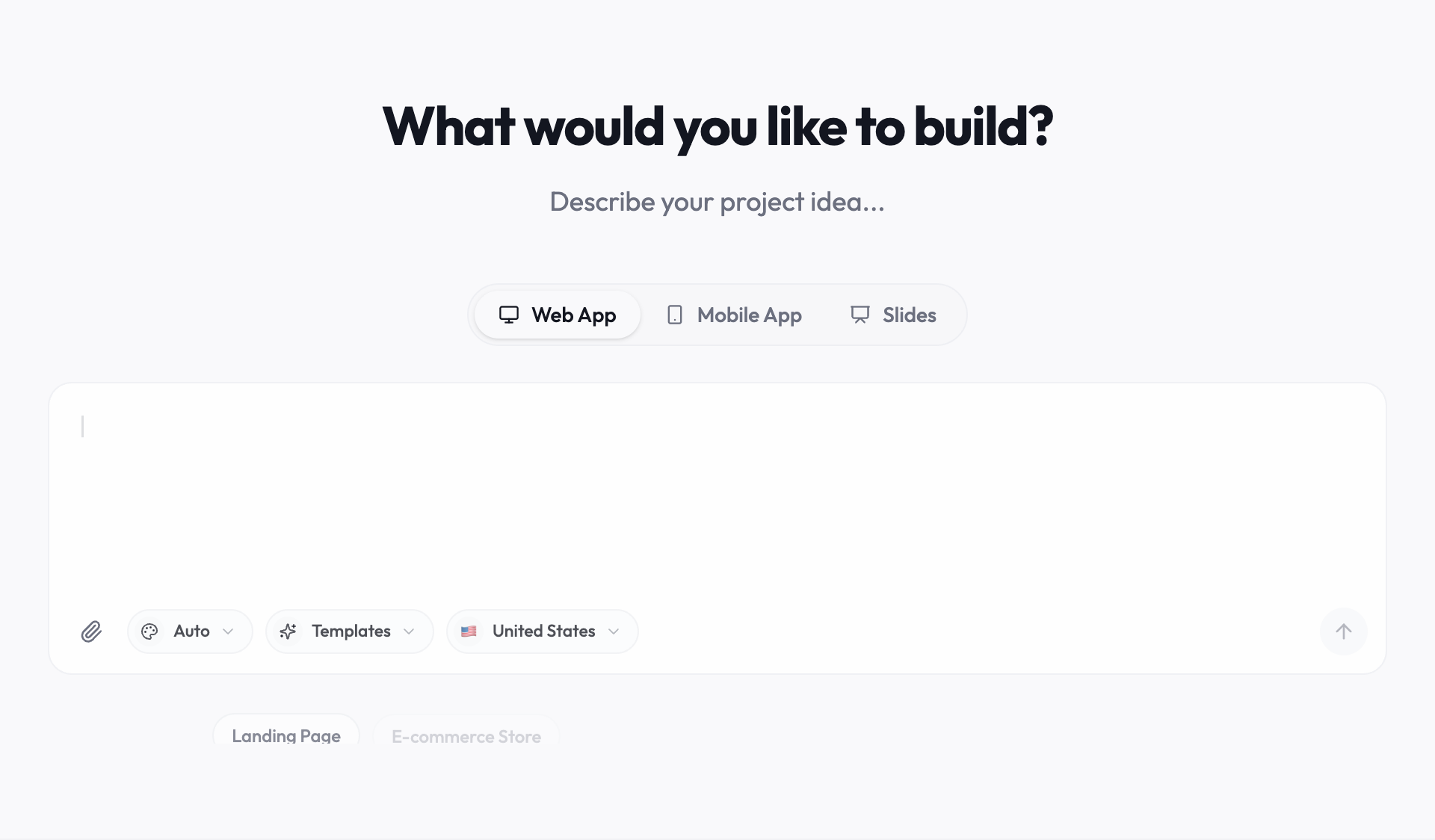
Open the composer and choose a web app. Paste a prompt like this one, then swap in your niche:
"Build a web app called VenueMatch, a concierge for couples choosing a wedding venue in Austin. Home page with one headline and a 'Find my venue' button. A five-question intake form: date, guest count, budget, indoor or outdoor, style. A results page that shows the three best matches from a venues table, each with photos, price range and scores from 1 to 5 for parking, noise limits, rain backup, catering rules and accessibility. A 'Request a quote' button that saves the request. An admin page where I can add and edit venues and their scores."
- Fill the table with your own data. This is the asset. Enter the venues you know, with scores you can defend. Ten real entries beat a hundred invented ones.
- Connect storage and payments. Youmake integrates with Supabase for the database and logins, and with Stripe if you want to charge a deposit or a finder's fee.
- Change one thing at a time in the chat. "Add a filter for venues under $5,000." "Show the rain backup score first." Each change shows its credit cost.
- Run the security scan, then publish to your own domain. Send the link to five couples and watch what they do.
- Keep the code. Export it or sync it to GitHub so the product outlives any tool, Youmake included.
Once strangers start using it, set up monitoring for your app so you hear about errors before they do.
Honest limits
One acquisition is not a trend. Davidson had already co-founded and run Sonder for about a decade before he started Odessia. A first-time founder with a similar product should not expect the same attention.
The asset is also the slow part. Youmake can give you a working app in a day. It cannot get you accredited, visit venues for you, or negotiate a supplier deal. And an app that takes bookings or payments needs your review before real customers touch it: test every form, read the terms of the services you connect, and check what personal data you store.
Finally, Youmake is paid from the start. The trial is 3 days for $1 with a card, and Starter is $20 a month. If you are still comparing options, read what to check in an AI web app builder first.
FAQ
Did OpenAI confirm the Odessia acquisition? The announcement came from Odessia's founder on November 10, 2026, and Odessia's website states that OpenAI has acquired the company. The reports listed below do not include a separate statement from OpenAI, and the terms are not public.
Can I still use Odessia? No. Odessia's site says the service is no longer available. People with existing bookings or saved travel plans are told to contact Odessia's support by email.
Does this mean small AI startups get acquired quickly? Most do not. The useful lesson is what made Odessia worth buying: travel-agent accreditation and its own hotel data, on top of a product people could try.
More guides for people starting companies with AI are in the founders hub, including the solo founder playbook.
Start a 3-day Youmake trial for $1 →
Sources
- Odessia: "OpenAI has acquired Odessia" notice
- Francis Davidson, "Introducing Odessia" (October 14, 2026)
- Francis Davidson's announcement on X (November 10, 2026)
- Skift: Francis Davidson sells his AI travel startup to OpenAI (November 10, 2026)
- Unite.AI: OpenAI acquires AI travel startup Odessia as founder joins
- Sequoia Capital: Odessia company page
- Youmake code ownership