

On November 17, 2026, ClockwiseTV opened to the public: a video app for kids aged 8 to 12 with no ads, no autoplay and a paid plan from the first day. TechCrunch reports that it has taken no outside funding. Founder Hank Green, the co-creator of Crash Course and SciShow, is paying for it himself.
A self-funded startup has to make different choices from one that has raised a seed round, and this launch shows most of them in public. It charges from the first day and serves one narrow audience. You probably do not have Green's audience, but you can copy the structure. The software is the cheap part now: you can build a paid MVP in Youmake this week, and the last section has a prompt to start from.
What ClockwiseTV launched, and how it is funded
Here is what the company's site and the press coverage show:
- A parent and child agree how long a session lasts. The app only suggests videos that fit the time left and closes when the time is up. There is no feed and no autoplay.
- People pick every video. The site says, "A real person checks every video before it's added. No exceptions." CEO Leslie Morgan told TechCrunch that each video is checked at least four times and that the company does not use AI to screen content.
- The price is $6.99 a month or $69.99 a year through November 30, then $8.99 and $89.99. One subscription covers the family. The app is on iPhone, iPad and Android, in the US only.
- TechCrunch reports the company is funded entirely by Green, and that Morgan said it mattered for him to have "full control". Creators get an upfront fee plus 25% of revenue, shared by watch time.
- Green took the idea to Morgan in September 2025, according to TechCrunch. By September 1, 2026, a beta was running on iPad and Android tablets, per The Toy Book. A few hundred parents tested it before the public launch.
Why a self-funded startup fits this moment
Paying for your own company used to mean paying engineers for a year before anyone could try the product. That cost has dropped. An AI app builder produces the screens, the login and the checkout from a description, so the money you put in goes further.
The same tools also made content cheap. TechCrunch points to a New York Times report on low-quality AI videos reaching children on the big platforms. ClockwiseTV's answer is to sell what a generator cannot give a parent: a person who watched the video first. I think that is the pattern to copy. Let AI build the app, and spend your own hours on the part customers trust you for.
Five lessons for self-funded founders
1. Charge on the first day
With no investor money, revenue is the only thing that extends your runway. ClockwiseTV has no free tier with ads to subsidize it. The site says "No ads. Ever." and the price sits on the home page. If your plan is to grow free users now and find a business model later, you are describing a funded company, and you need someone else's money to run it.
2. Pick an audience you can describe in one line
"Kids aged 8 to 12, in the US" is an audience you can find, price for and write a home page for. It also keeps the first version small: a handful of categories and a short list of vetted creators. If you are still choosing a market, these vibe coding project ideas are sized for one person.
3. Sell the limit
Most video apps are designed to keep you watching. This one ends the session on purpose, and that limit is what parents are paying for. Ask what the large players in your category cannot do without hurting their own revenue. A free product paid for by ads cannot promise to stop showing ads. You can.
4. Run a closed beta before the public launch
The company tested with a few hundred parents on tablets, then added phones for the public release. Problems found in a small beta cost you an apology, while the same problems after launch cost you refunds and one-star reviews. Fifty testers are enough to learn whether people come back.
5. Give early buyers a price with a deadline
The launch rate ends on November 30, and early subscribers keep it for their first year. A real deadline gives a hesitant buyer a reason to decide now, and you get cash earlier. It only works if the deadline is true.
Build your paid MVP in Youmake, with a 3-day trial for $1 →
How to build a self-funded MVP with Youmake
Youmake turns a description into a website, web app, mobile app or slide deck, with a live preview next to an agent chat. Here is how I would test a paid, curated product with it.
-
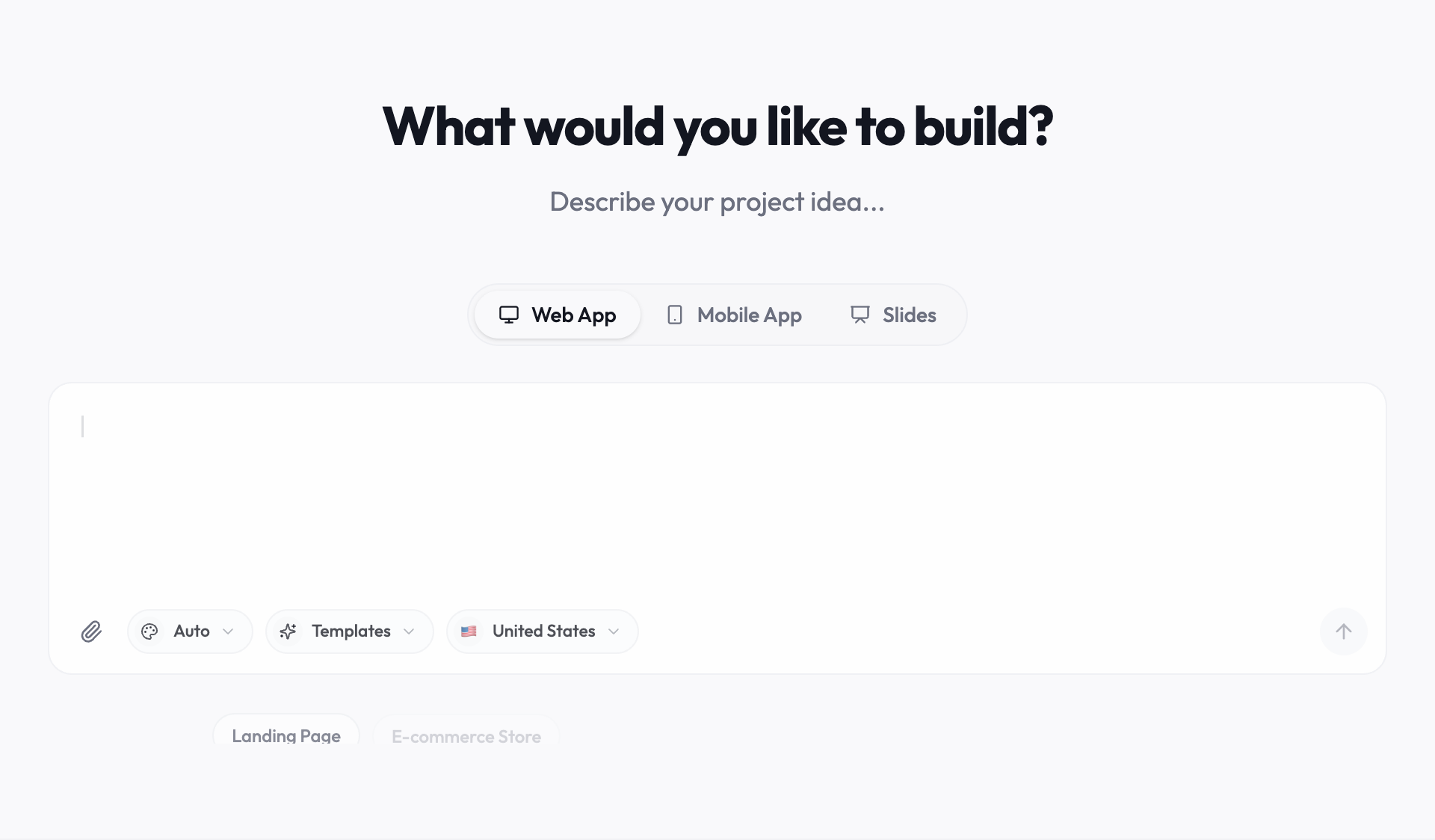
Open the composer and choose a web app. A web app is the fastest thing to put in front of testers. Paste a prompt like this and swap in your niche:
"Build a web app called QuietShelf, a paid library of hand-picked woodworking videos for beginners. Landing page with one headline, three benefits and a 'Start watching' button. A pricing section with a monthly plan, a yearly plan and a founding-member rate that ends on a date I set. Sign-up and login. A member library with five categories and a search box. A session timer the member sets before watching, with a 'time is up' screen. An admin page where I add a video link, title, length, category and my review note. No ads anywhere."
- Add your first 20 items by hand. The reviewed library is what people pay for, so do not ask the AI to fill it.
- Connect Supabase and Stripe. Supabase stores members and logins. Stripe takes the subscription, in your own account.
- Change one thing at a time in the chat. "Move pricing above the library preview." "Hide videos longer than the time left." Each request shows its credit cost before you send it, which helps when the budget is your own.
- Run the security scan and publish to your own domain. Then invite your beta group.
- Keep the code. Export it or sync it to GitHub. A company you fund yourself should not depend on one vendor.
If all you need first is a page that explains the offer and collects emails, start with the AI website builder. When the web version has paying members, the AI mobile app builder guide covers the phone version, and the guide to building an app without coding helps if this is your first build.
Honest limits
Hank Green is not a typical founder. He has spent more than 20 years building an audience online, he co-founded VidCon, and TechCrunch says he is funding the company from his own wealth. The amount is not public. Most people who pay for their own startup do it from savings or a day job, with no audience on launch day. The structure of this launch transfers to that situation, but the attention it got will not.
It has also been two days. Nobody outside the company knows yet whether parents will pay $6.99 a month, and neither do I.
The slow parts are still slow. Youmake can give you a working app in a day. It cannot review 200 videos for you, sign creators, or get a mobile app through store review. An app for children also carries legal duties around data and consent, so get advice before you collect anything from a minor.
Youmake is paid from the start too. The trial is 3 days for $1 with a card, and Starter is $20 a month for 40 credits. At $6.99 a month, three subscribers cover that plan before payment fees.
FAQ
What is a self-funded startup? A company paid for by its founders, from savings, income or the revenue of the business, without outside investors. People also call it bootstrapping. The founders keep ownership and control, and they carry all of the financial risk.
How much does ClockwiseTV cost? The site lists a launch price of $6.99 a month or $69.99 a year through November 30, 2026. After that it is $8.99 a month or $89.99 a year. It is available in the US only.
Can I build a subscription app without a developer? Yes, for a first version. Describe the screens in Youmake, connect Stripe for the subscription and Supabase for logins, then publish to your own domain. Read every screen and test the full payment flow before you invite real customers.
More guides for people starting companies with AI are in the founders hub. For a very different outcome from the same month, read the lessons from OpenAI's acquisition of Odessia.
Start a 3-day Youmake trial for $1 →
Sources
- ClockwiseTV: product and pricing
- ClockwiseTV: about the team
- TechCrunch: Hank Green is self-funding ClockwiseTV (November 17, 2026)
- The Toy Book: Hank Green, Leslie Morgan launch ClockwiseTV (September 1, 2026)
- Youmake code ownership