


In November 2026 the EdWeek Research Center published a national survey of 268 teacher educators about how their programs prepare teachers for AI. One percent said a standalone course is the main way their program teaches future teachers about it. Sixty percent said it depends on whichever instructor decides to cover it. That leaves much of the AI training for teachers to people outside the degree program: instructional coaches, district PD leads and independent trainers. If you are one of them, you can plan a short course around what the survey says educators want and publish it as a site with Youmake.
What the EdWeek survey found
The report is called "AI and Teacher Preparation: Results of a National Survey." The EdWeek Research Center ran it online from August 13 to September 4, 2026, with faculty who teach current or prospective teachers at degree-granting colleges and universities. Education Week covered it on November 16.
| Finding | Share of teacher educators |
|---|---|
| AI preparation is left to the individual instructor | 60% |
| The program does not teach future teachers about AI | 10% |
| A standalone course is the main approach (future teachers) | 1% |
| A standalone course is the main approach (current teachers) | 3% |
| Received no generative AI training from their institution | One-third |
| Receive ongoing training with follow-up | 14% |
| Want ongoing training with follow-up | 34% |
| Want a single one-off session | 8% |
The faculty are split on AI itself. Forty-six percent view AI in K-12 teaching positively, 35% negatively, and 19% are neutral.
Why the gap is an opening for coaches and trainers
The most useful finding for anyone who runs training is about what blocks these programs, because budget barely appears. Asked about the major obstacles to preparing future teachers, 57% said AI is developing faster than they can keep up, and 56% said faculty do not understand how to prepare teachers for it. Only 11% pointed to resources they cannot afford. A short course that someone keeps current answers both.
Colleges are not filling the gap for schools either. Among respondents who knew their program's arrangements, half said it has none of the AI-related partnerships with K-12 districts or schools that the survey listed, and 15% reported an agreement to provide AI professional development to a district's teachers.
Training for working teachers is growing, but it has not reached everyone. The report cites earlier EdWeek Research Center surveys in which the share of current teachers reporting no AI training fell from nearly 60% in fall 2024 to 42% by winter 2025-26. It also points to the union-led program we covered in 400,000 teachers learning to build AI agents. That still leaves about four in ten teachers with none.
The pattern shows up outside the US too. On November 10, OpenAI published a report on AI guidance in schools across Europe, the Middle East and Africa. It draws on a ThinkYoung study of 5,000 secondary students in 10 European countries: 79% had used AI for homework or assignments, and 47% said someone had shown them how. EdTech Innovation Hub reported that 62% of the 600 teachers in the wider study used AI through a personal account with no link to their school. OpenAI sells AI to schools, so read its report with that in mind. Its figures still point the same way as the EdWeek survey: students and teachers are using AI ahead of any guidance.
What AI training for teachers should cover
The survey is close to a syllabus if you read it that way. Each item below comes from a number in the report.
- Open with planning and materials. These are the uses programs already accept: 59% prepare future teachers to use AI for instructional ideas and 54% for course materials.
- Take a clear position on grading. Sixty-four percent say their programs do not prepare teachers to grade with AI and should not start, and 55% say the same about feedback. Don't skip the topic. State your district's rule and explain the reasoning.
- Teach the ethics module most programs still lack. Nearly 9 in 10 teacher educators agree future teachers should be prepared to teach students about ethical AI use, and 28% say their programs do not do it yet. End the module with a deliverable, such as a written classroom AI policy each participant can use on Monday.
- Split examples by grade band. Forty-one percent say pre-K and kindergarten teachers should not use AI at all. For high school teachers the figure is 18%. One set of examples for every grade will lose part of the room.
- Run a series with follow-up. Thirty-four percent want ongoing training and 8% want a one-off session, yet one-off sessions are what 21% have received. Plan four to six short sessions with a check-in after each.
- Date every module. The top obstacle was the pace of change. Put "last updated" on each lesson and review the course every term.
A series needs one address for the schedule, the lessons, the sign-up and the follow-up tasks, and a slide deck in a shared drive cannot be that. Start a 3-day Youmake trial for $1 and you can have that site in front of your first cohort this month.
How to build an AI training course site with Youmake
Youmake is an AI app builder for websites, web apps, mobile apps and slide decks. You describe what you want, watch a live preview, and change it by chatting with the agent.
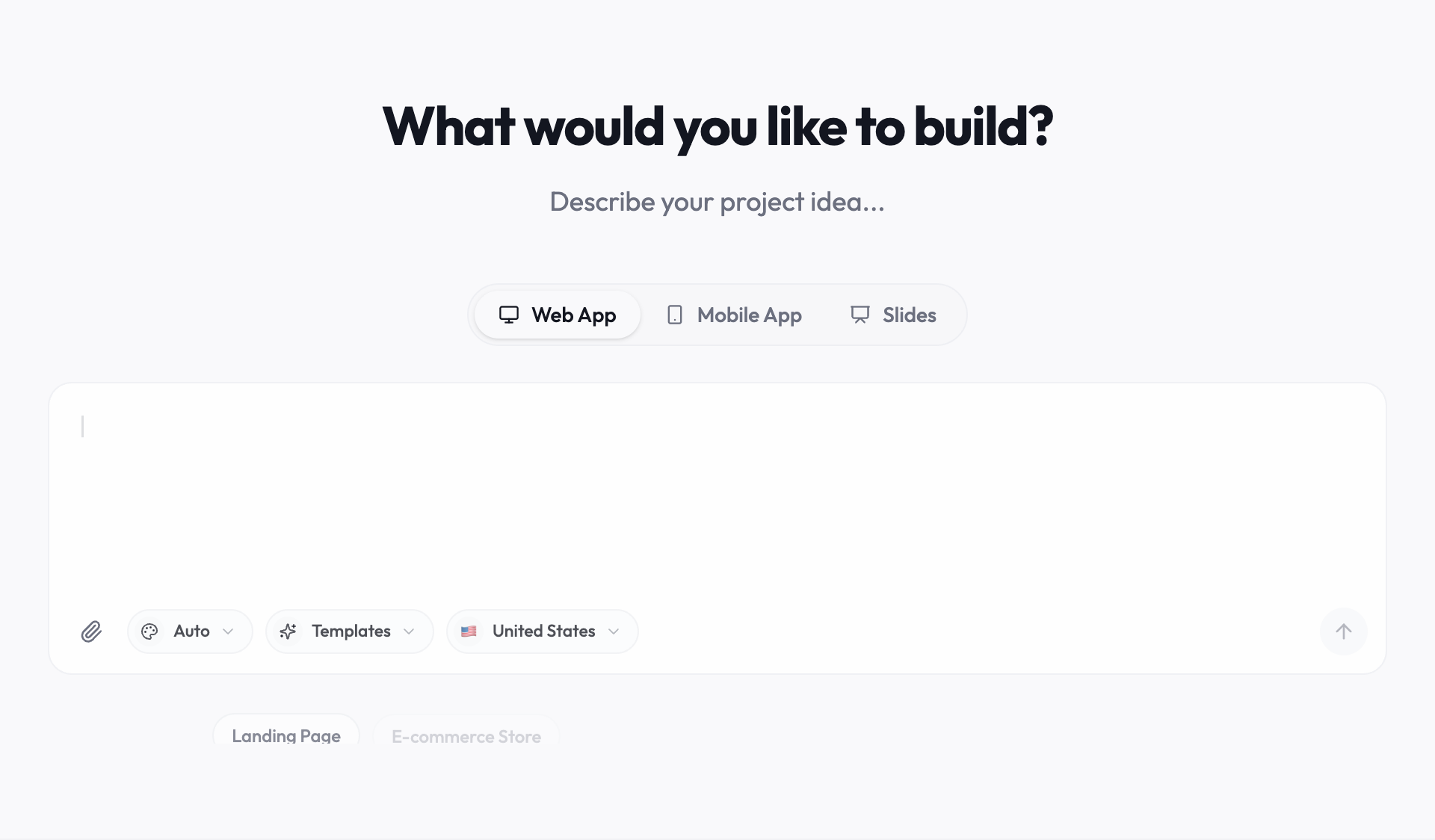
Paste this prompt and replace the bracketed parts:
Build a website for a 5-session professional development course called "AI for [Middle School] Teachers" run by [your name or district]. Pages: a landing page that says who it is for, what teachers will be able to do after each session, and the dates; a sessions page with one card per session (planning and materials, grading and feedback rules, teaching ethical AI use, grade-band examples, building your classroom AI policy), each showing a "last updated" date; a 5-question self-check quiz per session with a score at the end; a follow-up page where participants post one thing they tried in class; and a sign-up page with name, school and email. Calm design, large readable type, works well on phones.
Then:
- Replace the placeholder lessons with your own. The agent drafts sample text. Your district's rules and your examples are the course, so paste them in.
- Change one thing at a time in the chat. Ask for a shorter landing page, a sixth session or a printable handout, and check the preview after each change.
- Connect sign-ups and payment only if you need them. Youmake integrates with Supabase to store registrations and with Stripe if you sell the course to schools or individual teachers.
- Run the security scan before publishing. The scan matters once a form collects names and emails.
- Publish to your own domain, such as aipd.yourdistrict.org, and send one link to every participant.
The Youmake AI website builder page shows what small sites like this look like. If your district later wants the course inside its own systems, you can export the code or sync it to GitHub, as described under code ownership. For a public, paid course, our guide to building a course website with AI covers the offer page in more detail, and how to build an app without coding helps if this is your first build.
Honest limits
- The survey covers 268 teacher educators at colleges and universities. It describes what degree programs do. It does not measure the quality of training that districts run themselves.
- A website does not grant PD credit. If teachers need clock hours or credits, get the course approved by your district or state before you promise them.
- Youmake builds and publishes the site. It does not write your curriculum, and it does not know your district's AI rules.
- The 62% figure on personal accounts comes from press coverage of the study OpenAI cites, and that study covers Europe, the Middle East and Africa. It is not US data.
- Youmake is a paid product. The trial is $1 for three days with a card, then Starter is $20 a month. Each change uses credits, so write your session outlines first and build second.
FAQ
What should AI training for teachers include? Lesson planning and materials, a clear rule on grading and feedback, how to teach students ethical AI use, and examples split by grade band. In the EdWeek survey, more than half of programs already prepare teachers for planning and materials, and grading is where faculty set the limit.
How long should an AI professional development course be? The survey supports a series over a single event. A third of teacher educators want ongoing training with follow-up and 8% want a one-off session. Four to six short sessions with a task between each is a workable format.
Do I need to be a developer to publish the course? No. You describe the site, review the live preview and publish it. The work that takes time is writing the sessions.
More guides for teachers and trainers are in our AI in Education hub. When your session outlines are ready, start a 3-day Youmake trial for $1 and publish the course at an address your teachers can find.
Sources
- EdWeek Research Center, "AI and Teacher Preparation: Results of a National Survey" (November 2026): https://www.edweek.org/research-center/reports/ai-and-teacher-preparation-results-of-a-national-survey
- Full report (PDF): https://epe.brightspotcdn.com/ca/91/82f32d9547cebf6209d6641c33db/ai-and-teacher-preparation-survey-report-final-11-13-26.pdf
- Education Week, "AI Raises Big Questions for the Future of Teacher Education" (Alyson Klein, November 16, 2026): https://www.edweek.org/teaching-learning/ai-raises-big-questions-for-the-future-of-teacher-education/2026/11
- OpenAI, "Closing the AI guidance gap in education" (November 10, 2026): https://openai.com/index/closing-ai-guidance-gap-education/
- eWeek, "OpenAI Finds AI Guidance Gap in European Schools as Student Use Surges" (November 17, 2026): https://www.eweek.com/news/emea-openai-ai-guidance-gap-european-schools/
- EdTech Innovation Hub, "OpenAI calls for teacher training as student AI homework use outpaces guidance" (November 12, 2026): https://www.edtechinnovationhub.com/news/openai-calls-for-teacher-training-as-student-ai-homework-use-outpaces-guidance
- Youmake pricing: https://www.youmake.dev/