

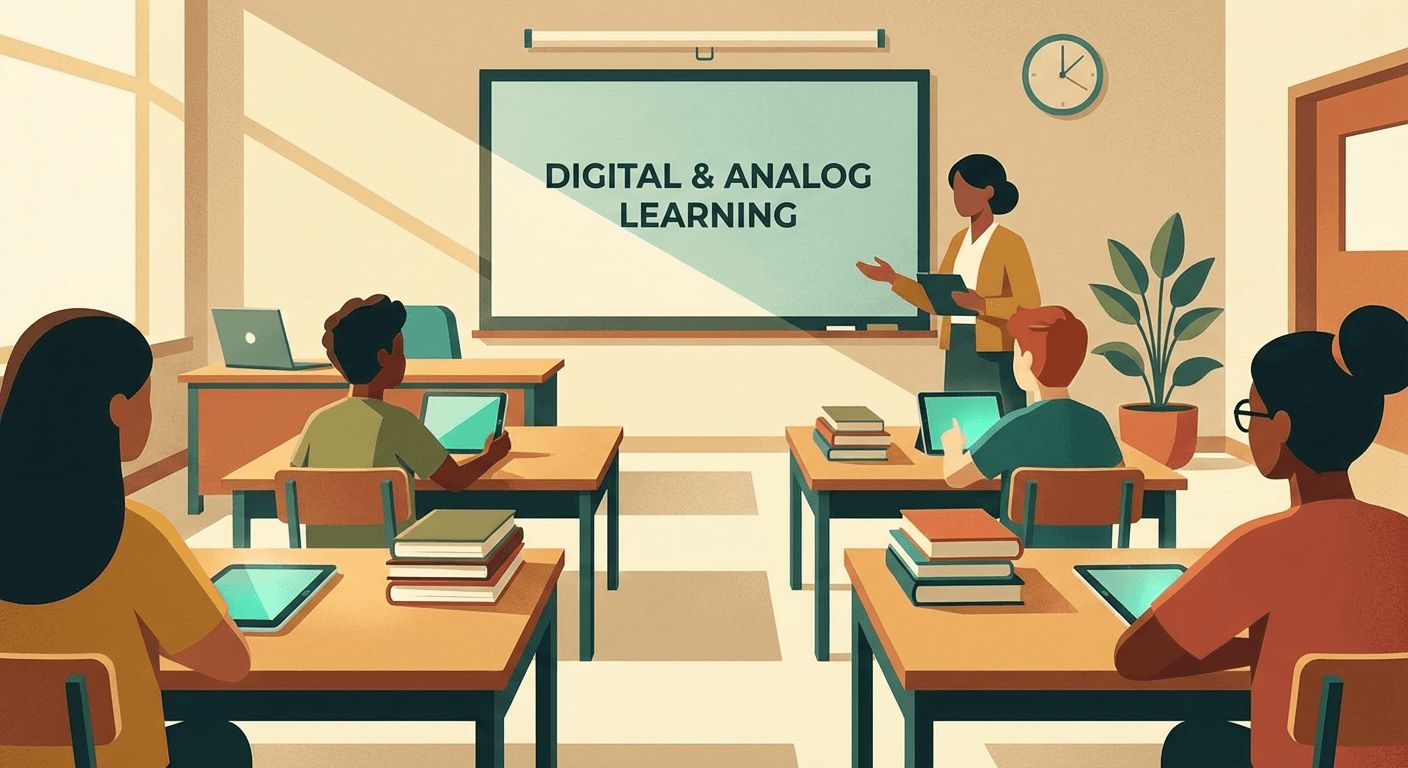
There's a growing wave of legislation across the United States aimed at making schools screen-free zones. States are drafting bills, parents are rallying, and the narrative is simple: screens are bad, remove them, problem solved.
I get the impulse. I really do. But this movement, well-intentioned as it is, fundamentally misdiagnoses the problem — and the proposed cure might be worse than the disease.
The Current Landscape
As of March 2026, multiple state legislatures are actively pushing for what they call a "new normal" — schools where personal devices are banned and even instructional screen time is heavily restricted. The movement has been fueled by genuine concerns: declining attention spans, rising anxiety among teens, and a growing body of research linking excessive screen time to developmental issues.
EdSurge recently reported on this legislative push, and the stories are compelling. Teachers describe students who can't sit through a lesson without reaching for a phone. Parents worry about social media's grip on their children's mental health. The data on teen anxiety and depression correlates uncomfortably well with smartphone adoption timelines.
But here's where I part ways with the ban-everything crowd.
Banning Screens Doesn't Build Digital Literacy
When we remove screens entirely from educational environments, we're not teaching kids to have a healthy relationship with technology. We're teaching them that technology is something to be feared and avoided.
That's like teaching kids about nutrition by never letting them near a kitchen.
The students graduating today are entering a workforce that runs on AI, cloud computing, and digital collaboration. Companies like Microsoft are embedding AI assistants into everything from Xbox to enterprise software. Adobe's leadership transition — with CEO Shantanu Narayen stepping down after 18 years — explicitly frames the future as being "shaped by AI, by new workflows and by entirely new forms of expression."
How do we prepare students for this world by hiding them from screens?
The Real Problem: Passive Consumption vs. Active Creation
The distinction that gets lost in this debate is the difference between passive screen consumption and active digital creation. A student scrolling TikTok for three hours is having a fundamentally different experience than a student using a tablet to code a simple app, research a historical event, or collaborate on a presentation with classmates across the country.
Research from MIT's Media Lab has consistently shown that when children use technology as a creative tool rather than a consumption device, the outcomes flip entirely. Engagement goes up. Critical thinking improves. The anxiety-inducing dopamine loops that social media creates simply don't apply to creative work.
The problem isn't the screen. It's what's on it.
What Actually Works
Instead of blanket bans, here's what the evidence supports:
1. Structured Digital Environments
Schools that succeed with technology don't hand kids iPads and hope for the best. They use managed devices with curated software — tools designed for learning, not entertainment. Companies like GoGuardian and Securly have built entire businesses around making classroom technology safe and focused.
2. Media Literacy as a Core Subject
Finland — consistently ranked among the top education systems globally — doesn't ban screens. Instead, they teach media literacy starting in elementary school. Students learn to identify misinformation, understand how algorithms work, and critically evaluate digital content. By the time they're teenagers, they have the tools to navigate digital spaces responsibly.
3. Phone-Free, Not Screen-Free
There's a meaningful difference between banning personal smartphones (which are primarily social media delivery devices) and banning all screens (which eliminates valuable educational tools). The phone pouches that companies like Yondr provide have shown genuine results in improving classroom focus without throwing out the digital baby with the bathwater.
4. Teaching Self-Regulation
This is the hardest one, but it's the most important. Students need to develop the metacognitive skills to manage their own attention. Tools like screen time dashboards, focused work timers, and digital wellbeing curricula give students agency over their relationship with technology rather than having adults simply remove the temptation.
The Equity Problem Nobody Talks About
Here's what really bothers me about the screen-free movement: it disproportionately affects students who don't have technology at home.
For a kid whose family can afford a home office full of devices, a screen-free school is a minor inconvenience. They go home and get all the digital literacy practice they need. But for students whose only access to technology is through school — and that's millions of kids — removing screens removes their only pathway to digital fluency.
In 2026, digital literacy isn't a nice-to-have. It's as fundamental as reading and writing. When we make schools screen-free, we're widening the digital divide and calling it progress.
A Hema Khatri Moment
EdSurge recently published a beautiful piece by educator Hema Khatri titled "When a Box Is No Longer a Castle: Restoring Wonder in a Screen-Filled World." The premise resonates deeply — children's imaginative play is being displaced by screen-based entertainment.
But the solution Khatri describes isn't removing screens. It's about creating spaces and moments where imaginative play thrives alongside technology. It's about intentional design, not blanket prohibition.
That's the nuance this debate needs. Not screens vs. no screens, but thoughtful integration vs. mindless deployment.
What I'd Tell Legislators
If I had five minutes with every state legislator drafting a screen-free school bill, I'd say this:
Your instinct is right. Kids are struggling with technology, and schools need to be part of the solution.
Your approach is wrong. Prohibition has never been an effective long-term strategy for anything. Not alcohol, not drugs, and not screens.
Fund digital literacy programs instead. Take the energy and money you'd spend enforcing a ban and invest it in training teachers to use technology intentionally, teaching students to self-regulate, and building curricula that turn passive consumers into active creators.
The goal shouldn't be screen-free schools. It should be screen-smart schools. And there's a world of difference between the two.
The Builder's Perspective
At Youmake, we believe technology should empower people to create, not just consume. That philosophy applies to kids as much as adults. When students learn to build with technology — to turn an idea into an app, a story into a video, a question into a research project — screens become tools of empowerment rather than weapons of distraction.
The future isn't screen-free. It's screen-intentional. And the schools that figure this out first will produce the most capable, creative, and resilient graduates.